
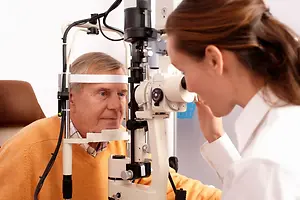
Changes inside your eyes can begin long before they interfere with everyday vision. That matters with conditions such as glaucoma and cataracts, where identifying changes and monitoring eye health can help your optometrist recommend appropriate next steps.
A medical eye exam looks beyond whether you need a new glasses prescription. It gives your optometrist an opportunity to examine the health of your eyes, investigate symptoms, and monitor diagnosed eye conditions. At McCormack Optometric Centre, our Edmonton optometrists combine careful examinations with modern diagnostic technology and clear explanations, continuing a standard of care that has served West Edmonton families since 1986.
What Is a Medical Eye Exam?
A medical eye exam focuses on a specific eye health concern, symptom, condition, or risk factor. Your optometrist examines the structures of your eyes and may use diagnostic testing or imaging based on your individual needs.
You may benefit from a medical eye exam when you experience:
- New or changing vision
- Eye discomfort or pain
- Fluctuating or blurry vision
- New flashes or floaters
- Changes related to an existing eye condition
- Eye health concerns associated with diabetes
- Signs or risk factors associated with glaucoma or cataracts
Your family and medical history can also provide valuable context. During an exam, your optometrist can review these factors alongside your symptoms and examination findings.
The purpose is straightforward: find out what is happening inside your eyes and determine what care or monitoring may be appropriate.
How Does a Glaucoma Eye Exam Work?
Glaucoma refers to a group of eye conditions associated with damage to the optic nerve, which carries visual information from the eye to the brain. Some forms can progress gradually, making regular eye health assessment particularly valuable for people with glaucoma or related risk factors.
A glaucoma eye exam may involve several measurements and assessments rather than one single test. Your optometrist may evaluate the optic nerve, measure pressure inside the eye, and use additional diagnostic testing based on your findings and history.
At McCormack Optometric Centre, advanced diagnostic technology includes Optical Coherence Tomography (OCT). OCT creates detailed images that allow our optometrists to examine structures inside the eye and monitor changes over time.
Those comparisons can matter. Eye care often involves looking at more than a single snapshot. When your optometrist has previous examination results and images available, changes can be assessed in the context of your individual eye health history.
Can Glaucoma Affect Vision Before You Notice It?
Changes associated with glaucoma can develop while a person still feels that their everyday vision is functioning well. That makes professional assessment an important part of ongoing glaucoma care.
If an examination identifies an area that needs attention, your optometrist can explain the findings and discuss the appropriate next steps.
What Happens During a Cataract Eye Exam?
A cataract develops when the eye’s natural lens becomes cloudy. Cataracts commonly develop with age and can gradually change the quality of vision.
People with cataracts may experience changes such as:
- Blurry or hazy vision
- Increased sensitivity to glare
- Difficulty seeing clearly at night
- Colours appearing less vivid
- Changes in glasses prescriptions
- Greater difficulty with everyday visual tasks
A cataract eye exam allows your optometrist to assess the lens and consider how changes are affecting your vision.
The presence of a cataract does not automatically determine what happens next. Your symptoms, visual needs, examination findings, and the effect on everyday activities all provide useful context when discussing care.
For some patients, monitoring may be appropriate. When cataracts progress to the point where surgical assessment becomes relevant, McCormack Optometric Centre also provides cataract surgery co-management, supporting patients through pre-operative and post-operative eye care.
Glaucoma and Cataracts Need Different Care
Glaucoma and cataracts can both affect vision, but they involve different parts of the eye and require different approaches to assessment and management.
A cataract affects the natural lens inside the eye. Glaucoma involves damage to the optic nerve. This distinction is one reason a medical eye exam involves more than checking how clearly you can read an eye chart.
Your optometrist looks at the structures responsible for healthy vision and considers the complete clinical picture.
For patients already diagnosed with an eye condition, follow-up appointments also allow the optometrist to compare findings over time. That ongoing record can help guide future monitoring and care.
Who Should Consider a Medical Eye Exam?
A medical eye exam can be appropriate when symptoms, medical history, age, or an existing diagnosis calls for a closer look at eye health.
Patients may seek medical eye care because they have noticed a change themselves. Others may attend appointments for ongoing monitoring of glaucoma, cataracts, diabetes-related eye concerns, macular degeneration, or another diagnosed condition.
Age can also change the conversation around eye health. As people grow older, conditions such as cataracts, glaucoma, and macular degeneration become increasingly relevant during comprehensive eye care.
The right examination schedule depends on the individual. Your optometrist can recommend follow-up timing based on your eye health, medical history, examination findings, and other risk factors.
Medical Eye Exams at McCormack Optometric Centre
Eye health can feel complicated when unfamiliar terminology, test results, and treatment options enter the conversation. Clear explanations make a difference. McCormack Optometric Centre has provided eye care to Edmonton families since 1986. Our team-based approach continues the philosophy established by Dr. Richard McCormack: examine patients carefully, explain findings clearly, and recommend care with their long-term vision in mind.
Our optometrists provide medical eye care for glaucoma, cataracts, diabetic eye concerns, macular degeneration, dry eye, and other changes in ocular health. Advanced diagnostic technology, including OCT imaging, supports detailed assessment and ongoing monitoring when appropriate.
Patients who require cataract surgery can also receive professional pre-operative and post-operative co-management through our clinic.
Most importantly, you should leave your appointment knowing what your optometrist found and what comes next.
Book a Medical Eye Exam in Edmonton
Changes in eye health deserve clear answers. Whether you have symptoms, an existing diagnosis, or concerns about glaucoma or cataracts, a medical eye exam can provide the information needed to guide your next step.
McCormack Optometric Centre has cared for West Edmonton families for decades, combining established clinical experience with modern diagnostic technology and patient education.
Book an eye care appointment with McCormack Optometric Centre in Edmonton for a thorough assessment of your vision and eye health.