
If your vision is changing and glasses are not helping the way they used to, it is worth having this assessed. Keratoconus can affect how light enters the eye, making vision less clear over time. Our team can help you understand what is happening and what to do next.
Keratoconus Could Be the Reason Your Vision Keeps Changing


Why Your Vision May Not Feel Clear Anymore
Keratoconus is a condition in which the cornea, the clear front surface of the eye, gradually becomes more irregular in shape. That change affects how light enters the eye, which can lead to blurred or distorted vision.
For some patients, the first sign is that glasses stop working as well as expected. For others, the prescription keeps changing, but vision still does not feel clear or stable.
If that sounds familiar, it is reasonable to have it checked. An assessment can help determine whether keratoconus is involved, what it means for your vision, and whether further management is needed.
Signs Something More Than a Prescription Change May Be Happening
Keratoconus does not always feel obvious at first. Many patients notice that their vision seems off and that standard correction is no longer solving the problem. Patients often notice:
-
Blurred or distorted vision
-
Frequent changes in prescription
-
Ghosting or multiple images in one eye
-
Glare or halos around lights
-
Difficulty getting crisp vision, even with updated glasses
These changes are not always caused by keratoconus, but when your vision becomes harder to correct in a typical way, it is worth looking into more closely.

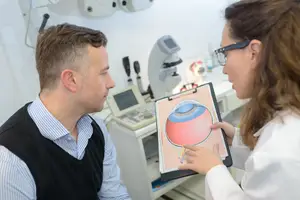
Getting Answers Can Help You Move Forward
Patients often assume that blurred vision or a changing prescription simply means they need stronger glasses. In many cases, the next useful step is not only updating the prescription, but understanding why the vision is changing.
That is why an assessment matters. It should help you leave with more than a label. It should help you understand what may be causing the changes in your vision, whether keratoconus is involved, and what the next step should be.
How We Assess for Keratoconus at McCormack Optometric Centre
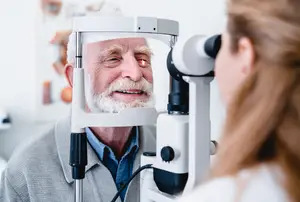
Assessment begins with a comprehensive eye exam and a closer evaluation of the cornea. Your optometrist looks for signs that the shape of the eye has become irregular and may use diagnostic imaging to better understand what is happening.
This helps determine whether keratoconus is present and whether it appears stable or is changing over time. It also gives us a clearer picture of why your vision is not correcting as expected.
The goal is not just to identify the eye condition. It is to explain the findings clearly so that you understand what they mean and how your care should be guided from here.

When Glasses Are No Longer Enough
One of the most frustrating aspects of keratoconus is that glasses may stop providing clear vision, even after the prescription is updated. That often leads patients to feel that their vision no longer makes sense.
This is one of the main ways the eye clinic helps. When glasses no longer explain what you are seeing, your optometrist can assess whether the shape of the cornea is affecting vision and whether another approach is likely to work better.
There are ways to improve vision and guide care from here. The important step is identifying what is actually causing the problem.
Scleral Lenses Can Improve Vision for Some Patients
For many patients with keratoconus, scleral contact lenses can provide clearer and more stable vision than glasses or standard contact lenses. These lenses create a smooth optical surface over the cornea, which can improve how light enters the eye.
They are not recommended automatically. They are considered when the assessment shows that standard correction is no longer giving the quality of vision you need.
If scleral lenses are appropriate, the fitting process is carefully and closely monitored. The goal is to improve how well you can see day to day and to make sure the lenses remain suitable over time.

Schedule a Keratoconus Assessment in Edmonton
If your prescription keeps changing, your glasses are no longer giving clear vision, or you have been told you may have keratoconus, booking an assessment is a practical next step. You will leave with a clearer understanding of what may be affecting your vision, whether keratoconus is involved, and what should happen next to help you see more clearly.