
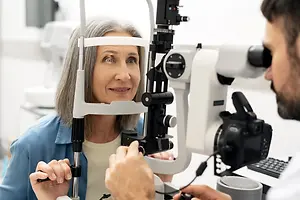
Changes inside your eyes can happen quietly. You may still read, drive, work, and enjoy your usual routines while an eye condition develops or progresses in the background. Glaucoma, cataracts, macular degeneration, and diabetic eye disease can all make ongoing eye health monitoring valuable.
At McCormack Optometric Centre, our eye doctors provide medical eye care for adults in Edmonton. Careful exams and diagnostic imaging give our team a detailed view of your eye health. Regular visits also allow us to compare findings over time, explain what we see, and recommend care based on changes in your eyes.
Why Eye Disease Monitoring Matters
A single eye exam gives our eye doctor a picture of your eye health at that moment. Ongoing monitoring adds another valuable piece: time. Comparing exam findings and diagnostic images can show whether an eye condition remains stable or changes between visits.
Age and health history can shape how closely our eye doctor recommends monitoring your eyes. Conditions such as cataracts, glaucoma, and age-related macular degeneration become more common with age. Diabetes, family history, and previous eye health findings can also influence how often our eye doctor wants to examine your eyes.
Eye Conditions We Monitor Over Time
Different eye diseases affect different parts of the eye, so monitoring can vary from one patient to the next. At McCormack Optometric Centre, our eye doctors combine thorough examinations with modern diagnostic technology to assess eye health and follow changes over time.
Glaucoma
Glaucoma refers to a group of eye diseases that damage the optic nerve. Early stages can have few noticeable symptoms, while changes to peripheral vision may develop gradually.
Glaucoma monitoring gives our eye doctor a way to follow your optic nerve and other signs of the disease over time. Optical coherence tomography, or OCT, provides detailed images of structures inside the eye and can help our team track structural changes.
Cataracts
Cataracts develop when the eye's natural lens becomes cloudy. As they progress, you may notice blurred vision, glare, greater sensitivity to light, faded colours, or more difficulty seeing clearly at night.
Regular eye exams allow our eye doctor to track these changes and discuss how cataracts affect daily tasks. When surgery becomes appropriate, our team can also provide pre-operative and post-operative care for cataract surgery.
Age-Related Macular Degeneration
Age-related macular degeneration affects the macula, the part of the retina responsible for detailed central vision. Changes in this area can affect activities such as reading, recognizing faces, and seeing fine details.
OCT imaging gives our eye doctor a close view of the retina and macula. Comparing images across appointments can help reveal structural changes and guide ongoing monitoring.
Diabetic Eye Disease
Diabetes can affect the retina and its small blood vessels, sometimes before a person notices vision changes. A diabetic eye exam allows our eye doctor to assess the retina for signs of diabetic retinopathy and other vascular changes.
For adults living with diabetes in Edmonton, regular retinal assessments can become an important part of broader healthcare. Our team can monitor your eye health over time and explain any findings in clear, practical language.
What Happens During Eye Disease Monitoring?
Monitoring starts with a conversation. Our eye doctor will ask about your health history, current vision, medications, symptoms, and any changes you have noticed. From there, testing can provide a more detailed picture of your vision and eye health.
Depending on your needs, your appointment may include:
- A review of your vision and current prescription
- A detailed assessment of your eye health
- Retinal examination and imaging
- OCT scans to view internal eye structures
- Comparison with findings from earlier appointments
- A discussion of your results and recommended follow-up care
These visits matter because they fit into the bigger picture. A small change can carry more meaning when our eye doctor can compare it with previous results. Long-term records help create a clearer clinical history.
The eye care team at McCormack Optometric Centre follows a team-based approach built around careful examinations, patient education, and continuity of care. Our eye doctors take time to explain their findings so you can leave your appointment with a clearer picture of your eye health and what comes next.
When Should You Book an Eye Exam?
Your recommended exam schedule depends on your age, health history, family history, current eye health, and any conditions our eye doctor is following. Patients with diabetes, glaucoma, macular degeneration, cataracts, or other ongoing eye health concerns may benefit from an exam schedule based on their individual findings.
Contact our clinic promptly if you experience:
- Sudden changes in vision
- An eye injury
- Strong eye pain or discomfort
- Redness or discharge that worsens quickly
- New flashes, floaters, or other sudden visual symptoms
- New visual symptoms that concern you
These symptoms can have several causes. A timely assessment helps our eye doctor identify what is happening and recommend appropriate care. Patients experiencing sudden symptoms can also contact our clinic about emergency eye care.
Protect Your Sight With Local Eye Care
Healthy vision supports the details that fill an ordinary day, from reading a message to driving across Edmonton or seeing a familiar face clearly. Regular eye disease management lets our team track the small changes that can shape your sight over time.
At McCormack Optometric Centre in Edmonton, Alberta, our eye doctors combine careful examinations, diagnostic imaging, and clear patient education with decades of community experience. Book an eye exam with our team and give your eye health the benefit of careful, ongoing attention.
Frequently Asked Questions
What Is Eye Disease Management?
Eye disease management involves regular exams and diagnostic testing to monitor an existing eye condition or changes that may affect vision. Our eye doctor can compare results across visits and recommend follow-up care based on your individual eye health.
What Does Glaucoma Monitoring Include?
Glaucoma monitoring can include a detailed eye examination and diagnostic testing based on your needs. OCT imaging can provide detailed views of structures inside the eye and help our team track glaucoma-related changes.
Why Do People With Diabetes Need Eye Exams?
Diabetes can affect blood vessels in the retina. A diabetic eye exam checks the retina for signs of diabetic retinopathy and other vascular changes. Regular assessments allow our eye doctor to follow your eye health alongside your broader diabetes care.
Can Eye Disease Develop Before I Notice Symptoms?
Yes. Some eye diseases can produce few noticeable symptoms during their early stages. Regular eye exams give our eye doctor an opportunity to assess structures inside the eye and compare findings over time.