
Clear vision can make healthy eyes seem like a given. Yet some eye conditions can begin changing the eye long before those changes become obvious in everyday life. Glaucoma can develop with few early warning signs, while cataracts often progress gradually as the eye’s natural lens becomes cloudy.
At McCormack Optometric Centre, our eye doctors provide comprehensive vision care for adults and seniors throughout Edmonton and surrounding communities. Medical eye care gives our team a closer look at your vision and eye health, helping with the early detection of eye diseases, tracking changes over time, and planning eye care based on what we see.
What Is a Medical Eye Exam?
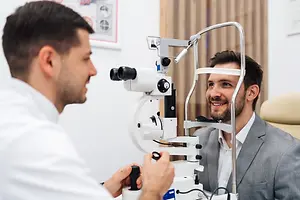
A medical eye exam looks beyond how clearly you can read an eye chart or whether you need new eyeglasses and contact lenses. Our eye doctor examines the health and structures of your eyes for signs of disease or other concerns. Depending on your eye health and reason for the visit, testing may include measuring eye pressure and using advanced diagnostic imaging to examine structures such as the retina and optic nerve.
Medical eye care becomes especially valuable when our eye doctor checks for eye diseases such as glaucoma and macular degeneration, as well as conditions such as cataracts. Glaucoma can damage the optic nerve, while cataracts cloud the eye’s natural lens. Comprehensive eye exams provide our team with valuable information to guide monitoring, treatment, or further care when changes occur.
When Should You Have a Medical Eye Exam?
A medical eye exam may be recommended when symptoms appear, when you have risk factors for eye disease, or when our eye doctor needs to monitor an existing condition. Regular eye exams can also reveal changes before they begin interfering with your daily routine.
Our eye doctors may recommend closer attention to your eye health if you:
- Notice blurry, cloudy, or changing vision
- Have trouble seeing clearly at night
- See halos around lights or become more sensitive to glare
- Have a personal or family history of glaucoma, macular degeneration, or other eye diseases
- Have diabetes or another health condition that can affect the eyes
- Experience changes in your peripheral vision
- Develop persistent dry eye symptoms or other changes in eye comfort
- Have reached an age when cataracts and other age-related eye conditions become more common
- Notice a sudden or unexplained change in your sight
A routine eye exam also allows our eye doctors to follow changes in your vision and eye health over time. The appropriate eye exam schedule depends on factors such as your age, health history, symptoms, and previous findings.
How Does a Medical Eye Exam Protect Your Sight?
A medical eye exam gives our eye doctors information that vision testing alone cannot provide. At McCormack Optometric Centre, our team can examine structures inside the eye, assess eye pressure, and use advanced diagnostic imaging when appropriate to build a fuller picture of your eye health.
1. Support Early Detection of Glaucoma
Glaucoma can gradually damage the optic nerve with few noticeable symptoms in its early stages. A glaucoma eye exam, supported by OCT and other advanced diagnostic technology when appropriate, helps our eye doctors look for changes and recommend monitoring or care based on your findings.
2. Spot Cataract Changes as They Develop
Cataracts gradually cloud the eye’s natural lens, which can lead to blurry vision, glare, and trouble seeing at night. A cataract eye exam helps our eye doctor assess these changes and determine when monitoring or cataract co-management may be appropriate.
3. Look for Other Eye Diseases
Medical eye care extends beyond glaucoma and cataracts. Our eye doctors also provide care for eye conditions such as macular degeneration, diabetic eye disease, dry eye, and ocular surface disease, giving patients access to a broad range of eye care services.
4. Build a Record of Your Eye Health
Regular eye exams give our eye doctors a valuable baseline to compare against as your eyes change over time. McCormack Optometric Centre has served the Edmonton community since 1986, providing ongoing vision care for generations of local families.
5. Connect Eye Health With Overall Health
Health conditions such as diabetes can cause changes inside the eyes, including damage to blood vessels in the retina. Comprehensive eye exams allow our eye doctors to monitor these changes and support your long-term vision and eye health as part of your broader healthcare.
6. Plan the Right Next Step
Eye exam findings can help our eye doctor recommend monitoring, treatment, or co-management based on your needs. McCormack Optometric Centre provides ongoing care for glaucoma and other eye conditions, along with cataract co-management for patients in Edmonton.
Get a Clearer Picture of Your Eye Health in Edmonton, AB
From a routine eye exam to ongoing medical eye care, regular visits can give our team a clearer view of changes that deserve attention. At McCormack Optometric Centre, our eye doctors combine decades of community trust with modern diagnostic technology and comprehensive vision care. Book a medical eye exam to check for signs of glaucoma, cataracts, and other eye conditions and give our team a clearer picture of your eye health.
Medical Eye Care FAQs
What Happens During a Glaucoma Eye Exam?
- A glaucoma eye exam looks for changes associated with glaucoma, including signs of damage to the optic nerve. Our eye doctor may measure the pressure inside your eyes and examine the optic nerve. At McCormack Optometric Centre, OCT imaging can provide detailed information about structures inside the eye.
What Happens During a Cataract Eye Exam?
- During a cataract eye exam, our eye doctor checks the eye’s natural lens for clouding and evaluates how clearly you can see. We may also ask about changes such as blurry or hazy sight, glare, halos around lights, or difficulty seeing at night. When cataracts begin affecting everyday vision, our team can discuss your next steps. McCormack Optometric Centre also provides cataract co-management for patients who require surgical care.
Can Glaucoma Develop Without Symptoms?
- Yes. Glaucoma can develop with few noticeable symptoms during its early stages. A person may feel that their vision is fine while changes occur inside the eye. Medical eye exams allow our eye doctors to examine the optic nerve and other aspects of eye health beyond visual clarity.
Are Cataracts a Normal Part of Aging?
- Cataracts become increasingly common with age as the eye’s natural lens becomes cloudy. They can gradually make vision appear blurry, hazy, or dim and can increase problems with glare and night vision. A medical eye exam can help our eye doctor assess these changes and monitor how they affect your sight over time.